The Art of the Communal Table: Why 16 Seats Changes Everything
Picture this: You walk into what appears to be an elegant restaurant, expecting to be seated at your own intimate table for two. Instead, the host guides you toward a single, expansive oval table where fifteen strangers are already settling into their chairs. Your heart races slightly—this isn’t what you signed up for. Yet within minutes, you find yourself drawn into conversations that spark unexpected laughter, sharing dishes that taste better when passed between new hands, and discovering stories that will linger long after the last course.
This is the intentional magic happening nightly at Class Act Chicago, where co-founders Shreena Amin and Chef Nicolai Mlodinow have turned conventional restaurant wisdom on its head. In a world where most establishments prioritize private tables and predictable experiences, Class Act asks a revolutionary question: What if the most memorable meals happen when we share them with strangers?
The answer lies in a carefully crafted number: sixteen seats around one communal table. This isn’t arbitrary—it’s the result of thoughtful research into human psychology, social dynamics, and the lost art of gathering. Every detail, from the residential kitchen aesthetic to the two-seating rhythm, has been designed to transform a simple dinner reservation into something closer to an intimate dinner party where you happen to know only one person: yourself.
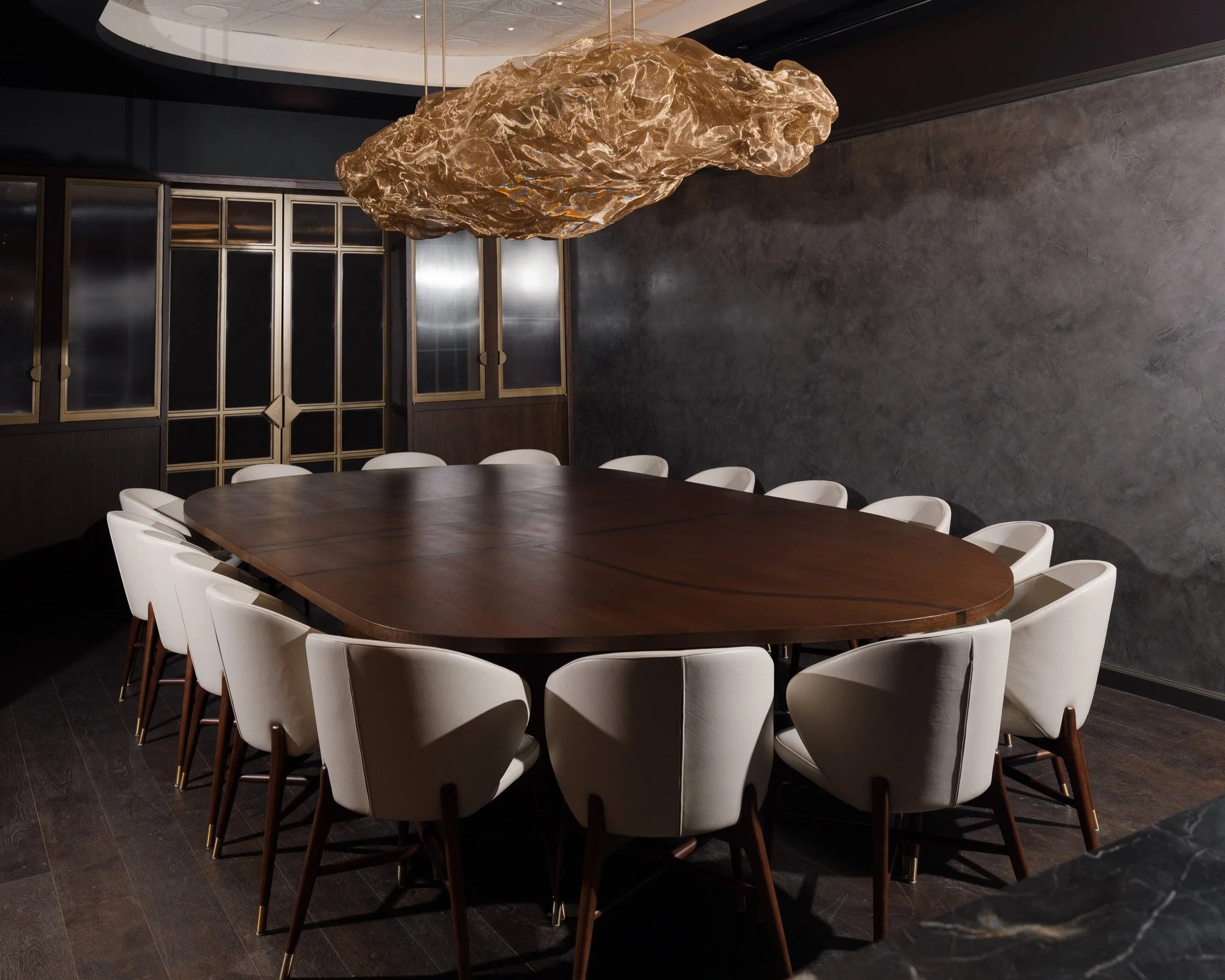
Class Act Dining Room featuring 16 person communal table
The journey ahead explores why this approach represents more than clever marketing or space efficiency. We’ll dive into the psychology that makes communal dining so powerful, examine the research behind optimal group sizes, and discover how Class Act’s founders turned social science into hospitality art. Most importantly, we’ll understand why sixteen seats might just be the perfect number for addressing our modern hunger for authentic human connection.
The Psychology of Shared Spaces: Why We Crave Connection at the Table
Deep within our evolutionary wiring lies a simple truth: we are not meant to eat alone. For thousands of years, sharing food has served as humanity’s most fundamental bonding ritual, triggering the release of oxytocin—often called the “trust hormone”—that builds social bonds and creates feelings of safety and belonging. When we break bread together, we’re participating in an ancient ceremony that predates language itself, one that signals cooperation, vulnerability, and mutual care.
Yet modern restaurant design often works against these biological imperatives. The standard dining room, with its neat rows of separate tables and emphasis on privacy, can feel more like a series of isolated islands than a community space. Diners sit mere feet apart while remaining complete strangers, their conversations contained within invisible bubbles that rarely overlap. This design philosophy made sense in an era when dining out was primarily about the food and service, but it misses something profound about why we truly gather around tables.
As Class Act co-founder Shreena Amin observes, “We spend more time alone than ever before and more time than ever on our digital devices. There are fewer reasons and spaces to interact with strangers.” This observation touches on what researchers have termed the modern “loneliness epidemic”—a crisis of connection that has only intensified since the pandemic. Studies show that social isolation now poses health risks equivalent to smoking fifteen cigarettes daily, making the need for authentic communal experiences not just desirable but essential for wellbeing.
The psychology of shared dining spaces operates on multiple levels. At its most basic, communal eating satisfies our need for social proof—seeing others enjoy food makes us more likely to enjoy it ourselves. But deeper psychological mechanisms are at play. When we sit close enough to share serving dishes and engage in the intimate choreography of passing plates, we enter what psychologists call “cooperative territory.” This physical proximity and shared purpose naturally lower social barriers and create what researchers term “propinquity effects”—the tendency to form relationships with those we encounter regularly in close physical spaces.
Research on communal dining psychology reveals how seating arrangements dramatically impact social interaction patterns. Traditional restaurant seating, with its emphasis on couples facing each other across small tables, creates inward-focused conversations that exclude others. Communal tables, by contrast, generate what sociologists call “social circulation”—the natural flow of attention and conversation that includes multiple participants and creates opportunities for spontaneous connection.
Historical precedents support this understanding. From medieval great halls to traditional Chinese round tables, cultures worldwide have long recognized the community-building power of shared dining spaces. The Greek symposium, the Jewish Sabbath table, the Italian piazza café—these aren’t just eating venues but social institutions designed to strengthen community bonds. Modern communal dining represents a return to this ancient wisdom, adapted for contemporary sensibilities and urban lifestyles.
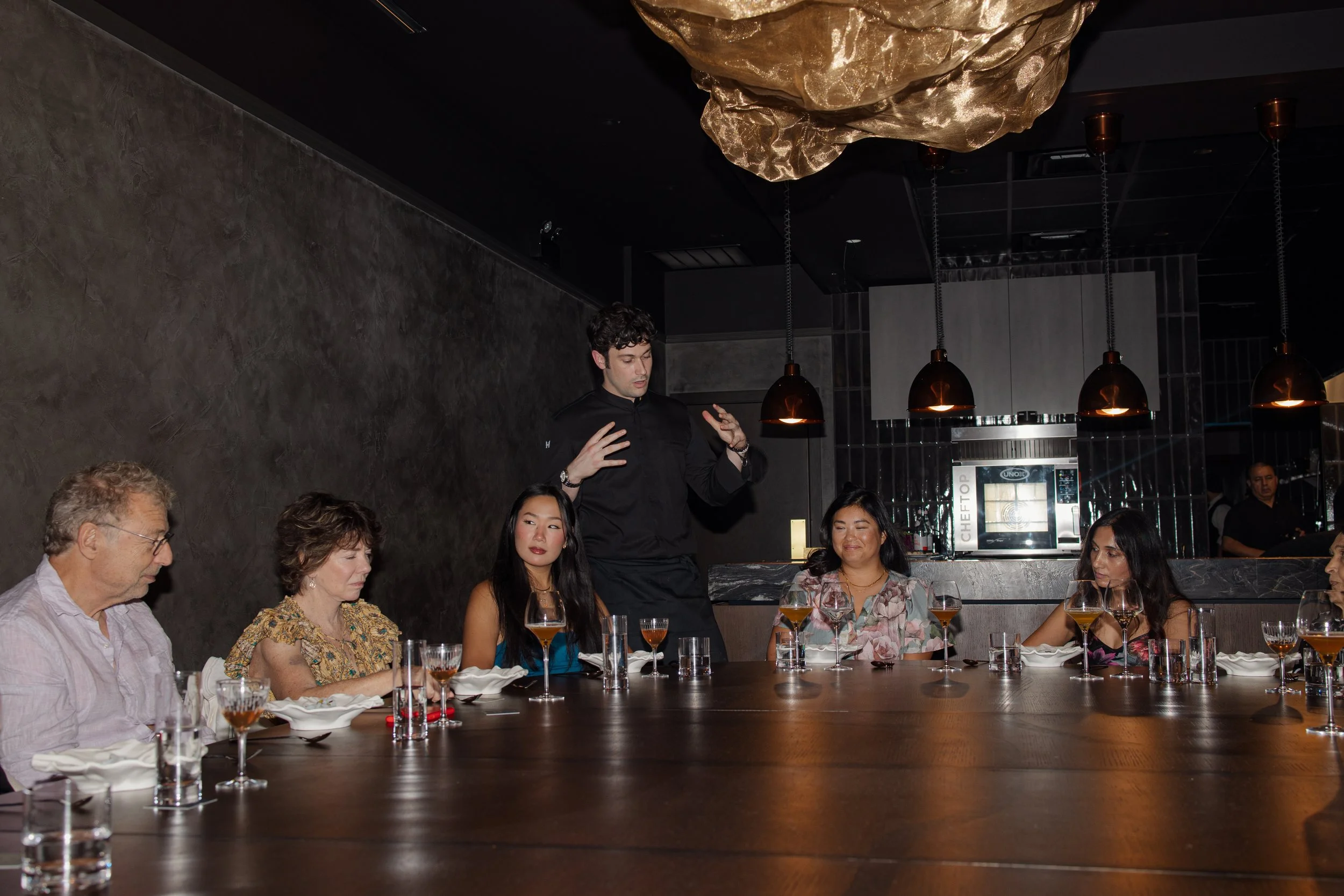
Guests gathered around the Class Act Communal Table
Yet successful communal dining requires more than simply removing table dividers. Research shows that the long table format works as an antidote to loneliness specifically because it creates what researchers call “organic interaction opportunities”—moments where conversation can flow naturally without feeling forced or performative. The key lies in designing spaces that facilitate voluntary engagement while respecting individual comfort levels.
This balance between connection and autonomy represents the holy grail of communal dining design. Too intimate, and diners feel trapped or overwhelmed. Too distant, and the space fails to generate the social energy that makes communal dining special. The most successful communal tables create what environmental psychologists term “sociopetal spaces”—environments that naturally encourage social interaction while providing enough flexibility for individual preferences.
The psychological benefits extend beyond the immediate dining experience. Regular participation in communal dining has been linked to increased social confidence, expanded social networks, and improved overall life satisfaction. For many diners, especially those new to a city or seeking to expand their social circles, communal tables provide a structured yet natural way to meet like-minded people. Unlike bars or dating apps, the shared meal creates a purposeful context for interaction that feels authentic and meaningful.
Understanding these psychological foundations illuminates why communal dining resonates so powerfully with contemporary diners. In an age of digital connection that often leaves us feeling more isolated than ever, the communal table offers something increasingly rare: genuine human encounter in a warm, welcoming environment. This sets the stage for a deeper question about optimal design.
The Science of the Sweet Spot: Why Size Matters in Social Dining
If communal dining taps into fundamental human psychology, then optimizing the experience requires understanding the delicate science of group dynamics. Social psychologists have spent decades studying how group size affects interaction patterns, and their findings reveal a fascinating truth: there’s a “Goldilocks zone” for social gatherings—not too small, not too large, but just right for meaningful connection.
Research on optimal social gathering sizes consistently shows that satisfaction peaks in groups of around five people and begins to decline significantly once groups exceed eight participants. This isn’t arbitrary—it reflects cognitive limitations in our ability to maintain meaningful conversations with multiple people simultaneously. Anthropologist Robin Dunbar’s famous research on social group limits suggests that humans can maintain stable relationships with only about 150 people, with much smaller numbers for close relationships and intimate conversations.
But communal dining tables present a unique challenge to these findings. Unlike cocktail parties or casual gatherings where people can easily move between conversations, diners are essentially committed to their seats for the duration of the meal. This constraint requires a different approach to group size optimization—one that considers both the psychology of sustained interaction and the practical realities of restaurant service.
The concept of “social loafing” becomes particularly relevant in larger groups. First identified by French agricultural engineer Max Ringelmann in the 1890s, social loafing describes the tendency for individual effort and participation to decrease as group size increases. In dining contexts, this translates to quieter guests becoming increasingly invisible as the table grows larger, while more extroverted diners dominate the conversation. The challenge for restaurant designers lies in creating table sizes that minimize this effect while maximizing social energy.
Community table design research shows that most successful communal tables accommodate between six and twelve diners. This range allows for what researchers call “manageable complexity”—enough diversity to create interesting dynamics without becoming overwhelming. However, Class Act’s decision to seat sixteen represents a deliberate expansion beyond conventional wisdom, based on a sophisticated understanding of how spatial design can overcome traditional group size limitations.
The key lies in understanding “conversation zones” within larger groups. Rather than expecting all sixteen diners to engage in a single conversation, successful large communal tables create multiple intimate dialogues that can flow and merge naturally throughout the meal. The oval table configuration at Class Act is particularly brilliant in this regard—it eliminates the hierarchical head-and-foot dynamic of rectangular tables while creating clear sight lines and conversation pockets that can expand and contract organically.
Spatial psychology research reveals how subtle design choices influence social dynamics. The distance between seats, for example, follows what anthropologist Edward T. Hall termed “proxemics”—the study of how physical space affects communication. Seats positioned too closely create uncomfortable intimacy with strangers, while too much distance inhibits conversation entirely. The optimal spacing for communal dining falls within what Hall called the “social distance” range—roughly eighteen to four feet—close enough for easy conversation but far enough to maintain personal comfort.

Class Act 16 Person Communal Table
The economics of group size also play a crucial role in restaurant viability. Sixteen seats represents a careful balance between social optimization and business sustainability. Smaller communal tables, while perhaps more intimate, require multiple setups to achieve necessary revenue per square foot. Larger configurations become unwieldy and risk alienating diners uncomfortable with crowd dynamics. Sixteen hits what hospitality designers call the “sweet spot”—large enough to create vibrant energy and economic efficiency while remaining manageable for both diners and service staff.
Advanced research in environmental psychology suggests that successful large communal tables work because they create what researchers term “nested intimacies”—smaller conversation groups within the larger social context. This allows diners to experience both the energy of a larger gathering and the comfort of more intimate dialogue. The oval configuration is crucial here, as it provides multiple “conversation corners” while maintaining visual connection across the entire table.
Time dynamics also influence optimal group size in restaurant settings. Unlike cocktail parties where guests arrive and leave continuously, restaurant seatings have defined beginning and end points. This temporal boundary changes how social dynamics develop—there’s time for initial awkwardness to dissipate, for natural conversation groups to form, and for the shared experience of the meal to create common ground among strangers.
The service implications of group size deserve consideration as well. Sixteen diners require more sophisticated choreography from restaurant staff, who must manage not just individual preferences but group dynamics. Servers become something like dinner party hosts, reading the room’s energy and adjusting their approach accordingly. This elevated service style transforms the traditional server-diner relationship into something more collaborative and community-focused.
Understanding the science behind optimal group size reveals why Class Act’s sixteen-seat configuration represents more than intuitive design—it’s the result of careful consideration of psychological, spatial, and economic factors that together create conditions for memorable communal experiences.
Class Act’s Philosophy: Designing Connection Into Every Detail
When Shreena Amin and Chef Nicolai Mlodinow envisioned Class Act, they weren’t simply designing another restaurant—they were architecting a philosophy of hospitality that puts human connection at its center. Every element of the three-room experience, from the initial welcome space to the final nightcap destination, reflects a deep understanding of how physical environment shapes social interaction. Their sixteen-seat oval table isn’t just furniture; it’s the physical manifestation of a belief that dining can be transformative when approached with intention and care.
The journey begins before diners even reach the communal table. Class Act’s three-room progression—welcome area, dining room, and Nightcap speakeasy—creates what environmental psychologists call a “social gradient.” The welcome room serves as a decompression space where guests can transition from the outside world and begin to open themselves to new encounters. This initial gathering space allows for what sociologists term “anticipatory socialization”—the gradual mental preparation for the communal experience ahead.
The residential kitchen aesthetic of the main dining room represents perhaps the most crucial design decision. As detailed in the Eater Chicago exploration, this choice transforms the traditional restaurant hierarchy where diners observe chefs from afar. Instead, Chef Mlodinow works within the social space, becoming part of the dinner party dynamic rather than a distant performer. This design reinforces his philosophy that “the sense of connection and belonging is everything to me.”
The oval table configuration itself deserves deeper examination. Unlike rectangular communal tables that create clear hierarchy with “head” and “foot” positions, the oval democratizes seating while maximizing sight lines. Every diner can see every other diner, creating what sociologists call “mutual awareness”—the foundation of group cohesion. The table’s dimensions have been carefully calibrated to support what Chef Mlodinow describes as food designed for sharing, including courses where diners “literally tear bread together.”
This emphasis on shared interaction through food represents a sophisticated understanding of what researchers call “behavioral interdependence.” When diners must coordinate to serve themselves from shared platters or participate together in bread-tearing courses, they engage in cooperative behaviors that naturally build trust and camaraderie. These moments of structured interaction provide natural conversation starters while creating shared memories that bond the group together.
The Northwestern Magazine profile reveals how Shreena Amin’s vision extends beyond the physical space to embrace timing and service philosophy. The two-seating structure ensures diners never feel rushed—crucial for allowing the natural progression from stranger to dinner companion that makes communal dining successful. This unhurried pace allows for what psychologists call “social warming”—the gradual process by which initial awkwardness transforms into genuine connection.
Staff training at Class Act reflects this community-building mission. Hospitality leads aren’t just delivering plates; they’re facilitating social interaction and reading group dynamics. This elevated role requires sophisticated interpersonal skills and represents a fundamental shift from traditional restaurant service models. The staff becomes part of the hosting team, responsible for the overall social success of the evening rather than just individual table satisfaction.

The dinner party starts in the Welcome Foyer.
The OpenTable overview illuminates how the three-room experience creates what hospitality researchers call “emotional sequencing.” Each space serves a different psychological function: the welcome room builds anticipation, the dining room creates connection, and Nightcap provides intimate reflection on the shared experience. This progression mirrors the natural rhythm of successful dinner parties, where energy builds gradually before settling into deeper, more personal conversations.
The kitchen’s central position within the dining space serves multiple psychological functions. It provides natural conversation topics as diners observe the culinary choreography unfolding before them. The cooking aromas create what environmental psychologists term “sensory anchoring”—shared sensory experiences that bond groups together. Most importantly, the open kitchen reinforces the residential feel that distinguishes Class Act from traditional restaurant environments.
Chef Mlodinow’s approach to menu design further supports the communal philosophy. Rather than individual plates that encourage inward focus, many courses are designed for sharing and interaction. This choice reflects deep understanding of how food presentation affects social dynamics. Shared platters require coordination and conversation, while individual courses can inadvertently create barriers between diners. The bread-tearing course becomes particularly powerful—a primal sharing ritual that breaks down social barriers and creates immediate intimacy.
The lighting design, while perhaps less obvious, plays a crucial role in social success. Warm, residential-style lighting creates what environmental psychologists call “social facilitation”—environmental conditions that encourage rather than inhibit conversation. The contrast with harsh commercial restaurant lighting is intentional and significant, contributing to the dinner party atmosphere that makes strangers feel like welcome guests rather than customers.
Even the reservation system reflects the communal philosophy. By seating strangers together rather than allowing guests to choose their companions, Class Act creates what sociologists term “structured serendipity”—organized opportunities for unexpected encounters. This approach requires significant confidence in the overall experience design, as restaurants essentially guarantee that strangers will enjoy each other’s company.
This comprehensive attention to every detail—from spatial flow to service philosophy to menu design—demonstrates how communal dining, when executed thoughtfully, becomes more than the sum of its parts. Class Act’s success lies not in any single element but in the careful orchestration of multiple factors that together create conditions for genuine human connection.
The Communal Renaissance: How a New Generation is Redefining Dining
Class Act’s innovative approach arrives at a pivotal moment in hospitality history, riding the crest of a broader cultural shift toward community-centered experiences. The communal dining renaissance isn’t happening in isolation—it reflects deeper changes in how younger generations approach food, social interaction, and authentic experience. Understanding this movement illuminates why sixteen seats around a shared table represents more than restaurant design; it’s a response to fundamental changes in how we seek meaning and connection in modern life.
The statistics are striking: according to The Guardian’s recent analysis, approximately 90% of Gen Z diners express enthusiasm for communal dining experiences. This remarkable approval rate reflects a generation that has grown up with digital connection but increasingly craves authentic, in-person interaction. Unlike previous generations who might have viewed shared tables as inconvenient or intrusive, younger diners see them as opportunities for adventure and genuine encounter.
This generational shift reflects what sociologists call “experiential values”—the prioritization of memorable experiences over material possessions. For Gen Z and younger millennials, dining out isn’t primarily about consuming food; it’s about collecting stories, meeting new people, and participating in something that feels meaningful and shareable. The rise of social media has paradoxically increased the appetite for experiences that feel authentically social rather than performed or staged.
The pandemic accelerated these trends in unexpected ways. Extended periods of isolation created what researchers term “social hunger”—an intensified desire for genuine connection that goes beyond digital interaction. As dining restrictions lifted, many people discovered they had lost comfort with casual social interaction and needed structured ways to rebuild their social confidence. Communal dining tables provide exactly this structure—a natural context for conversation that doesn’t require the social skills needed for bars or networking events.
Environmental consciousness also drives younger diners toward communal experiences. Shared tables often correlate with more sustainable business practices—higher efficiency per square foot, reduced food waste through family-style service, and emphasis on local, seasonal ingredients. For environmentally conscious diners, choosing communal dining becomes a way to align their social choices with their values around sustainability and responsible consumption.
The 2025 hospitality design trends reveal an industry-wide movement toward “intimate community spaces” that prioritize connection over privacy. Restaurant designers are increasingly incorporating communal elements—from shared counters to community tables to interactive cooking experiences—recognizing that younger consumers actively seek opportunities for social interaction rather than avoiding them.
The “third space” concept, popularized by sociologist Ray Oldenburg, provides additional context for this shift. Traditional third spaces—locations that aren’t home or work but serve as community gathering places—have largely disappeared from American life. Coffee shops, bars, and public squares that once facilitated casual social interaction have become more commercial and less community-focused. Restaurants embracing communal dining help fill this social infrastructure gap, providing structured opportunities for the kind of casual social interaction that builds community resilience.
Technology’s role in this renaissance proves particularly fascinating. Rather than replacing in-person interaction, social media has created appetite for experiences worth sharing. Communal dining photographs beautifully—the energy of multiple people engaged around a shared table tells a story that individual dining simply cannot. This “Instagram effect” rewards restaurants that create visually compelling, socially rich environments.
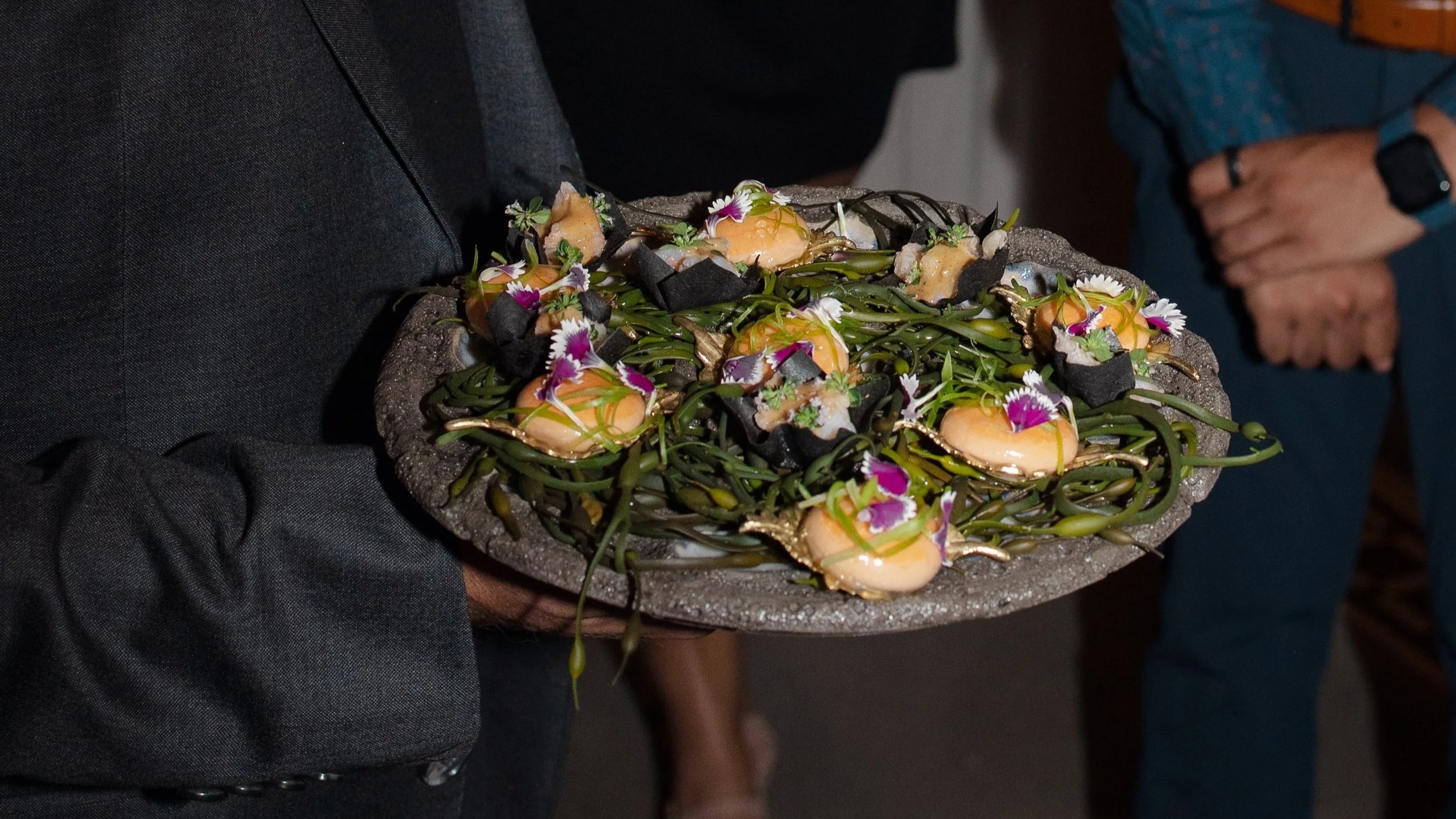
Thoughtfully shared first bites
The economic implications of this shift are substantial. Younger diners often have less disposable income than previous generations at similar ages, making the communal dining model attractive for both social and financial reasons. Shared platters and family-style service can provide better value while creating the social experiences these diners prioritize. Restaurants responding to this demand often find they can charge premium prices for communal experiences that would seem expensive for traditional individual dining.
Cultural diversity within younger generations also influences communal dining preferences. Many Gen Z diners come from cultural backgrounds where family-style eating and communal meals are traditional, making restaurant communal dining feel familiar rather than foreign. This cultural competence with shared dining gives younger diners confidence to embrace communal restaurant experiences that might intimidate older diners accustomed to more individualistic dining norms.
The wellness movement intersects with communal dining trends as well. Mental health awareness has made younger generations more conscious of social isolation’s impact on wellbeing. Communal dining is increasingly understood as a form of social wellness—a proactive choice to prioritize connection and community as essential elements of healthy living. This reframing transforms communal dining from social obligation to self-care practice.
Professional networking has also evolved to embrace more casual, authentic formats. Traditional networking events often feel forced and transactional to younger professionals. Communal dining provides a more natural context for professional relationship-building that doesn’t feel artificial or overly aggressive. Many young professionals now prefer meeting potential collaborators over shared meals rather than in formal business settings.
The communal renaissance extends beyond restaurants to influence other hospitality sectors. Hotels are redesigning lobbies and common areas to encourage interaction, coworking spaces emphasize community over privacy, and even retail environments increasingly incorporate communal elements. This broader shift suggests that communal dining represents just one manifestation of a larger cultural movement toward connection and community.
Understanding this generational transformation helps explain why Class Act’s sixteen-seat table feels perfectly timed rather than merely innovative. They’re not convincing diners to try something foreign; they’re providing sophisticated execution of something younger diners already actively seek.
The Guest Experience: What Changes When Strangers Become Dinner Companions
To truly understand the power of Class Act’s communal approach, we must examine what actually happens during those two hours when sixteen strangers transform into temporary dinner companions. The emotional journey from nervous anticipation to genuine connection represents one of hospitality’s most fascinating transformations—a real-time demonstration of how thoughtful design can overcome social barriers and create meaningful human encounter.
The experience begins before diners reach their seats, in those initial moments of scanning the table and wondering who these people are and whether the evening will be awkward or magical. This threshold moment is crucial—research in social psychology shows that first impressions form within milliseconds and significantly influence subsequent interactions. Class Act’s welcome ritual, where diners gather briefly in the entrance area before being seated together, helps normalize the communal concept while building anticipation for the shared experience ahead.
The initial seating choreography requires delicate navigation. Unlike traditional restaurants where couples or friends choose adjacent seats, communal dining often places strangers side-by-side while separating couples or friends. This intentional mixing, while initially uncomfortable, serves important social functions. It prevents the formation of exclusive conversation clusters while encouraging cross-pollination of dialogue throughout the table. Most diners report that this initial awkwardness dissipates within minutes as the shared context of the meal creates natural conversation topics.
Chef Mlodinow’s design philosophy shines particularly bright in courses where diners “literally tear bread together.” This moment often serves as the evening’s social turning point—the physical act of sharing food from the same source creates instant intimacy and breaks down the formal barriers that typically separate strangers. Diners frequently describe this bread-sharing as surprisingly meaningful, a primal bonding ritual that feels both ancient and immediate.
The progression of conversation throughout the meal follows predictable patterns that illuminate human social psychology. Initial exchanges typically focus on safe topics—the food, the restaurant, the unique nature of the communal experience itself. These conversations serve as social reconnaissance, allowing diners to assess compatibility and find common ground. As comfort levels increase, discussions naturally deepen to include travel stories, professional backgrounds, and personal interests.
The role of alcohol in this social progression cannot be understated. Wine service at communal tables often becomes collaborative, with diners sharing bottles and discussing selections together. This shared consumption creates what anthropologists call “ritual bonding”—the sense of participating in something ceremonial that transcends ordinary social interaction. Many diners report that sharing wine with strangers feels surprisingly natural in the communal dining context, where normal social protocols are temporarily suspended.
The physical proximity inherent in communal seating creates unique social dynamics that traditional restaurant design cannot replicate. When diners sit close enough to pass dishes directly to each other, share serving spoons, and coordinate their movements around shared platters, they engage in what sociologists term “cooperative territory behavior.” This physical collaboration naturally builds trust and creates shared ownership of the dining space.
Shreena Amin’s observation about what guests “take away and remember is who you sat next to, how you laugh together” reflects a profound truth about memory formation. While diners might forget specific dishes or service details, they vividly remember social moments—the couple celebrating their anniversary, the business traveler with fascinating stories, the local food enthusiast sharing neighborhood recommendations. These human connections become the meal’s most lasting souvenirs.
The absence of phones and tablets at most communal tables contributes significantly to the social success. While not explicitly prohibited, the communal context creates social pressure to remain present and engaged with fellow diners. This enforced digital detox allows for the kind of sustained conversation that has become rare in contemporary life, where interruptions and distractions constantly fragment attention.
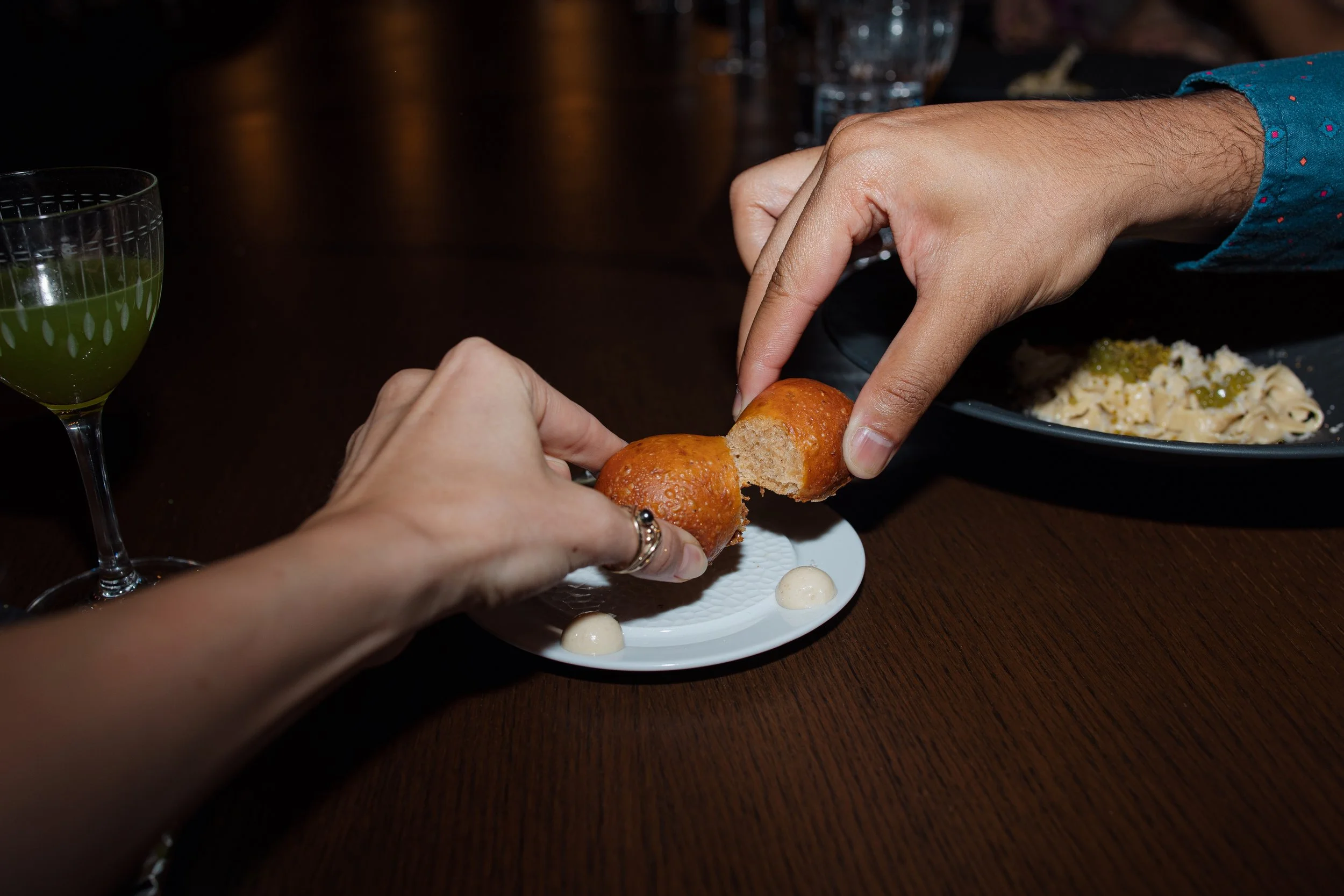
Guests break bread
Timing plays a crucial role in the social transformation process. The two-seating approach ensures diners have sufficient time for social warming—the gradual process by which strangers become comfortable with each other. Rushed meals rarely allow for this progression, while overly extended dining can lead to social fatigue. Class Act’s pacing strikes the optimal balance, providing enough time for meaningful connection without testing social endurance.
The service style supports this social evolution by treating the table as a cohesive group rather than collection of individual diners. Servers address the entire table when explaining dishes, encourage sharing and collaboration, and read group dynamics to adjust their approach accordingly. This community-focused service style reinforces the collaborative nature of the experience while ensuring no individual diner feels neglected or overwhelmed.
Many diners report that the communal experience changes their relationship with the restaurant itself. Rather than viewing Class Act as a service provider, guests often develop emotional attachment to the space and concept. This transformation from customer to community member reflects successful execution of what hospitality researchers call “sense of place”—the feeling that a location holds personal meaning and social significance.
The end-of-evening dynamics prove particularly interesting. Unlike traditional dining where couples or groups leave independently, communal tables often coordinate departures, exchange contact information, or continue conversations in the adjacent Nightcap space. These extended social connections represent the ultimate success of communal dining—when temporary dining companions become genuine social connections that extend beyond the restaurant walls.
The psychological aftereffects of successful communal dining extend well beyond the meal itself. Many guests report increased confidence in social situations, expanded social networks, and renewed appreciation for the possibility of meaningful connection with strangers. For some diners, particularly those new to cities or seeking to expand their social circles, communal dining experiences serve as gateway activities that rebuild social confidence and openness to new encounters.
This transformation from skeptical stranger to enthusiastic advocate represents the true magic of well-executed communal dining. It demonstrates how thoughtful design, intentional service, and quality food can combine to create experiences that transcend mere dining and become genuine community-building activities.
Beyond the Table: How 16 Seats Represents a Philosophy of Hospitality
The sixteen seats around Class Act’s oval table represent far more than efficient space utilization or trendy design—they embody a fundamental philosophy about hospitality’s role in building human community. In an industry often focused on throughput, profit margins, and customer satisfaction metrics, Class Act’s approach suggests a different measure of success: the depth of connection created between people who arrive as strangers and leave as friends.
This philosophy challenges basic assumptions about restaurant hierarchy and the traditional server-customer relationship. In conventional fine dining, clear boundaries separate diners from staff, kitchen from dining room, individual tables from each other. Class Act’s residential kitchen design and communal table configuration deliberately blur these boundaries, creating what hospitality researchers call “democratic dining spaces” where traditional power dynamics give way to collaborative community experience.
Chef Mlodinow’s articulation of food as a tool for communication and belonging reflects deep understanding of hospitality’s potential social impact. Rather than viewing cooking as performance or service delivery, this approach treats food preparation as community building activity. When diners can observe the creative process while sharing the resulting dishes with strangers, food becomes a medium for social connection rather than mere consumption.
The business implications of this philosophy are profound. By choosing community over efficiency, Class Act accepts certain operational challenges—longer service times, more complex coordination, higher staff training requirements—in service of creating experiences that generate emotional rather than just transactional value. This trade-off reflects what business researchers call “values-driven hospitality”—prioritizing mission alignment over pure profit optimization.
Shreena Amin’s vision of creating “life-enriching experiences” through stranger interaction positions restaurants as social infrastructure rather than mere entertainment. This perspective views dining establishments as community assets responsible for building social capital—the networks of relationships that make communities resilient and individuals more connected. In this framework, successful communal dining creates value that extends far beyond restaurant walls.
The spatial philosophy embedded in Class Act’s design reflects sophisticated understanding of environmental psychology. The three-room progression from welcome area to dining room to Nightcap creates what architects call “behavioral sequence”—spatial organization that guides social interaction through carefully orchestrated stages. This approach treats restaurant design as social engineering, using physical environment to facilitate human connection rather than simply accommodate food service.
The timing philosophy proves equally intentional. Two seatings rather than continuous service reflects understanding that meaningful social connection requires sufficient time for relationship development. This choice sacrifices potential revenue from additional table turns while ensuring the communal experience has time to develop naturally. Such decisions reflect confidence that deeper guest satisfaction will generate longer-term business success through word-of-mouth marketing and customer loyalty.
Staff training at Class Act extends far beyond traditional service skills to include social facilitation and group dynamics management. Servers must read table energy, encourage shy diners to participate, and moderate conversations that become too dominant or exclusive. This elevated role transforms restaurant staff from service providers into community facilitators, requiring sophisticated interpersonal skills and emotional intelligence typically associated with social work rather than hospitality.
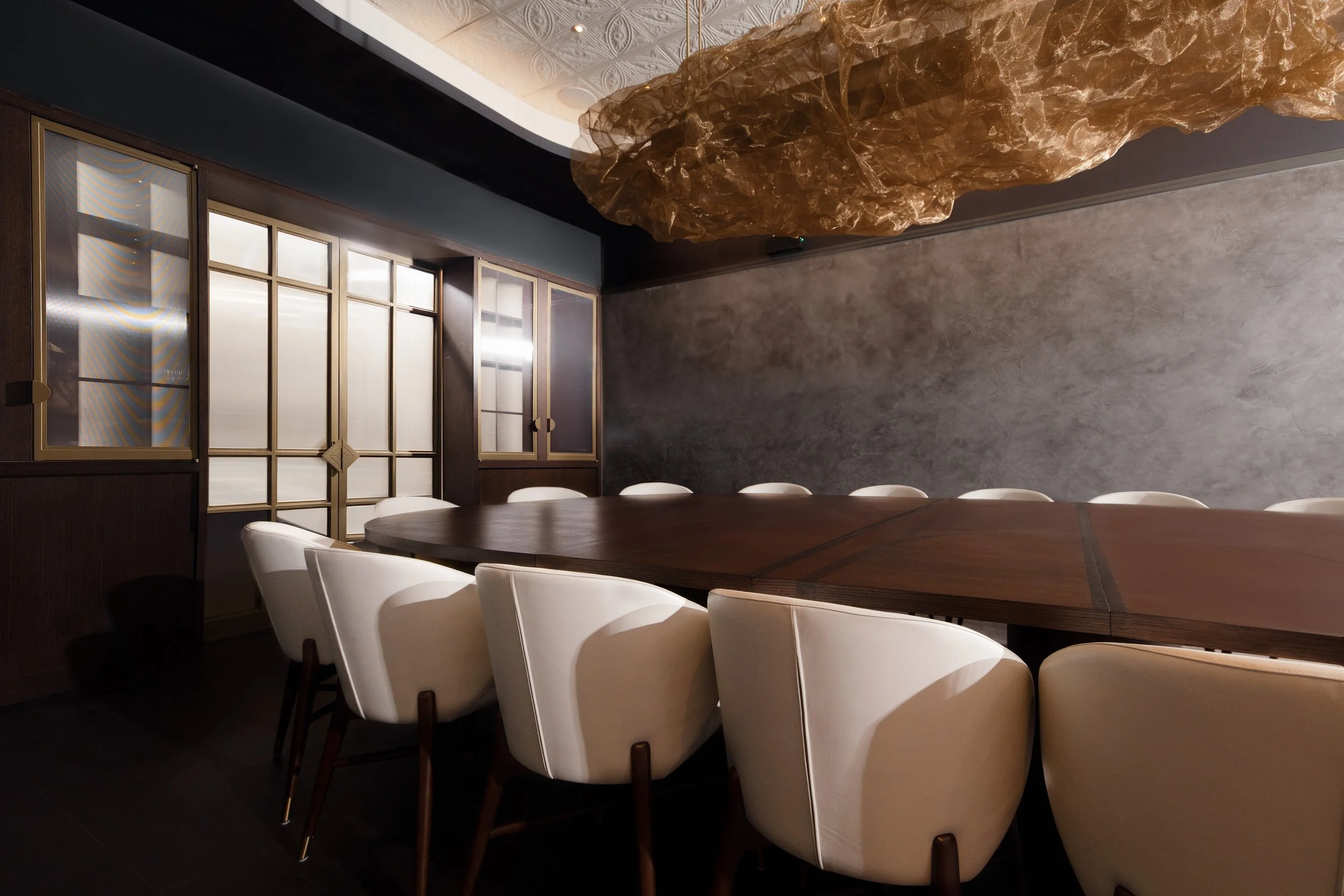
Class Act Dining Room and Communal Table
The food philosophy embedded in family-style service and collaborative dishes reflects understanding that sharing food creates bonds beyond individual satisfaction. When diners must coordinate to serve themselves from common platters or participate together in bread-tearing rituals, food becomes a social activity rather than individual consumption. This approach transforms eating from private act into community participation.
The reservation philosophy of seating strangers together represents perhaps the boldest aspect of Class Act’s community-building mission. Most restaurants allow guests to control their social environment by dining only with chosen companions. By intentionally mixing strangers, Class Act takes responsibility for social success while creating opportunities for serendipitous connection that wouldn’t otherwise occur. This approach requires tremendous confidence in overall experience design.
The economic philosophy underlying the communal model challenges traditional restaurant business assumptions. Rather than maximizing revenue per guest, the focus shifts to creating experiences valuable enough to justify premium pricing while building customer loyalty that generates long-term value. This approach treats guests as community members rather than transaction sources, investing in relationship building that extends far beyond individual meals.
Broader hospitality design trends show increasing industry movement toward community-focused spaces that prioritize connection over privacy. Class Act’s success provides a roadmap for other establishments seeking to implement similar approaches while demonstrating that community-centered hospitality can be both socially meaningful and financially viable.
The measurement philosophy at community-focused restaurants like Class Act necessarily extends beyond traditional metrics. Success includes factors like social connections made, customer return rates, referral patterns, and community impact rather than just revenue and efficiency measures. This broader definition of success reflects understanding that social value creation can drive long-term business sustainability.
The innovation philosophy embedded in Class Act’s approach suggests that meaningful hospitality advancement comes not from technological solutions but from deeper understanding of human social needs. In an industry increasingly focused on automation and efficiency optimization, Class Act’s emphasis on human connection represents a counter-trend that prioritizes authenticity over convenience.
This comprehensive philosophy positions Class Act as more than restaurant—it’s a demonstration project showing how hospitality can serve community building while maintaining business viability. The sixteen seats around their oval table represent a hypothesis about human social needs and a commitment to testing whether thoughtful design can create meaningful connection in an increasingly disconnected world.

Welcome Cocktails Poured for Dinner Party